We Use CookiesWe use cookies to enhance the security, performance, functionality and for analytical and promotional activities. By continuing to browse this site you are agreeing to our privacy policy

10 Best Thermal Image Cameras 2026 in the United States
#1

Winner

10.0  score

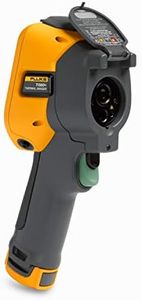
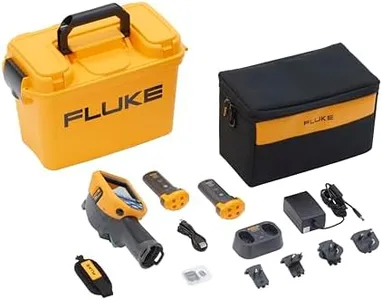
Fluke TiS75+ 27HZ, Thermal Imager

Frame Rate: 27Hz
Display and Connectivity: Connects to computer for image review
Durability and Ergonomics: IP54, drops up to 2m, battery, 7.5lb

Chosen by 1171 this week

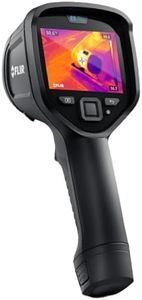
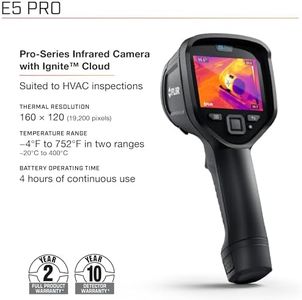
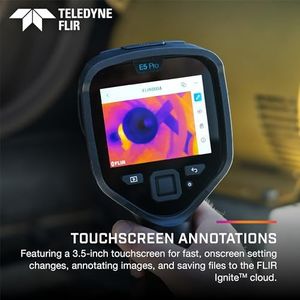
FLIR E5 Pro - Commercial Thermal Imaging Camera with Wifi. High Resolution Infrared Camera with FLIR Ignite Cloud

Resolution: 160 x 120 pixels
Temperature Range: -20°C to 400°C
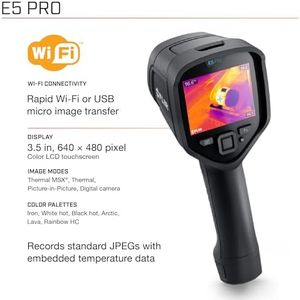
Display and Connectivity: WiFi, FLIR Ignite Cloud
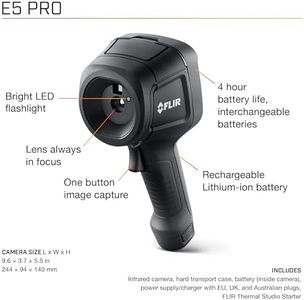
Durability and Ergonomics: Lightweight, 10 years detector warranty

Fluke FLK-TIS60+ 30HZ, Thermal Imager; GT1; 30 HZ
Display and Connectivity: touchscreen, Fluke Connect
Durability and Ergonomics: manageable size and weight

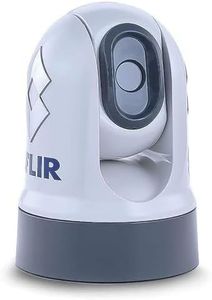
FLIR E70354 M232 Pan Tilt Thermal Camera 9hz

Resolution: 320 x 240
Frame Rate: 9Hz
Display and Connectivity: Ethernet and Wi-Fi connectivity
Durability and Ergonomics: IP67 rating, compact, lightweight

Fluke TIS20+ MAX 9HZ, Thermal Imager

Display and Connectivity: Fluke Connect Asset Tagging
Durability and Ergonomics: 2-meter drop, IP54 rating
How do we rank products for you?

Our technology thoroughly searches through the online shopping world, reviewing hundreds of sites. We then process and analyze this information, updating in real-time to bring you the latest top-rated products. This way, you always get the best and most current options available.

headphones-stars

Our Top Picks

#1

Winner

Fluke TiS75+ 27HZ, Thermal Imager
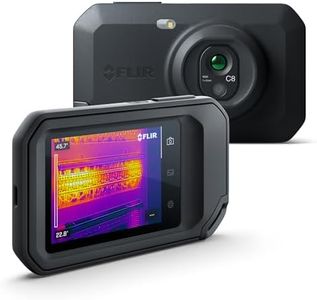
Rating
10.0
Chosen by1,171
Resolution
Durability and Ergonomics

Most important from
2 reviews

Resolution
The camera delivers excellent resolution, surpassing even higher-priced models.
Durability and Ergonomics
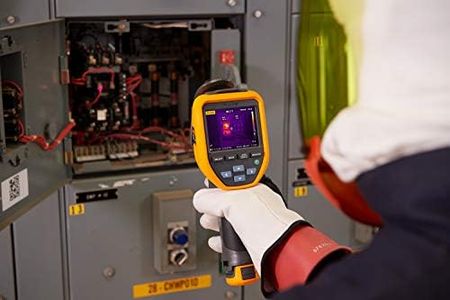
Its rugged design and features make it a reliable choice for industrial preventive maintenance.

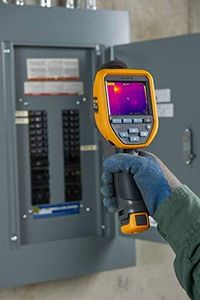
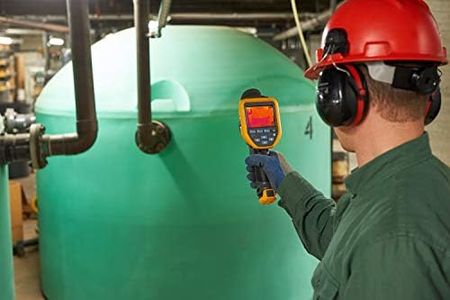
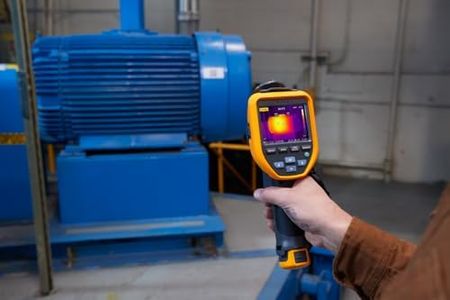
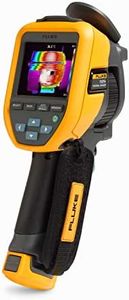
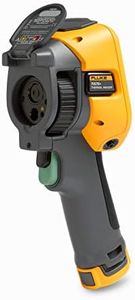
The Fluke TiS75+ 27HZ thermal imager is built tough for demanding industrial environments, featuring a rugged design that survives drops up to 2 meters and offers water and dust resistance (IP54). This makes it a reliable choice if you need a camera that won’t easily break during regular field use. It’s battery-powered and portable, weighing about 7.5 pounds, which is manageable but slightly heavier than some competitors.

One of this model’s standout features is its strong focus on helping users implement preventive maintenance programs efficiently. The Asset Tagging feature allows you to link thermal images to specific assets by scanning QR codes, creating an organized inspection timeline that saves time and helps spot issues early. Voice annotation and photo notes let you add clear explanations directly to images, which is great for documenting findings without confusion.

Connectivity is straightforward with the ability to connect to a computer for image review and organization. The 27Hz frame rate provides smooth thermal imaging suitable for most industrial tasks. The TiS75+ is well-suited for industrial users who prioritize durability and structured maintenance workflows, with ruggedness and asset management tools that help avoid downtime and streamline inspections.

Rating
10.0
Chosen by1,171
Resolution
Durability and Ergonomics

Most important from
2 reviews

Resolution
The camera delivers excellent resolution, surpassing even higher-priced models.
Durability and Ergonomics
Its rugged design and features make it a reliable choice for industrial preventive maintenance.
#2

FLIR E5 Pro - Commercial Thermal Imaging Camera with Wifi. High Resolution Infrared Camera with FLIR Ignite Cloud

Rating
8.2
Resolution

Most important from
21 reviews

Resolution
This thermal camera stands out as a professional-grade tool, far surpassing cheaper models that prove inaccurate and unreliable.

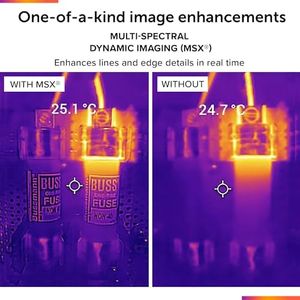
The FLIR E5 Pro is a solid choice if you're looking for a handheld thermal camera for commercial or industrial use. Its thermal resolution is 160 x 120 pixels, which is decent for spotting temperature differences but not the highest available. The temperature range from -20°C to 400°C (-4°F to 752°F) covers most common applications like electrical or mechanical inspections. It includes FLIR’s MSX technology, which overlays visual details on the thermal image to make it easier to understand what you’re looking at. This is helpful if you’re not an expert in reading thermal images.

The camera supports WiFi and connects to FLIR Ignite Cloud, making it simple to store, edit, and share your images wirelessly – a nice feature for technicians working in the field. FLIR cameras typically offer good enough performance for routine diagnostics. The device is lightweight and portable at just over 1.2 pounds, and it comes with a comprehensive warranty, including 10 years on the detector, which is reassuring for long-term use.

Being on the lower end of resolution might limit its effectiveness for very precise or fast-moving thermal analysis. If you need a basic, user-friendly thermal camera for general fault finding and maintenance tasks, the E5 Pro is a practical option with cloud connectivity and solid durability.

Rating
8.2
Resolution

Most important from
21 reviews

Resolution
This thermal camera stands out as a professional-grade tool, far surpassing cheaper models that prove inaccurate and unreliable.
#3

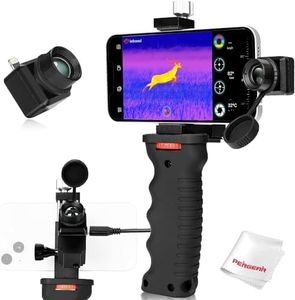
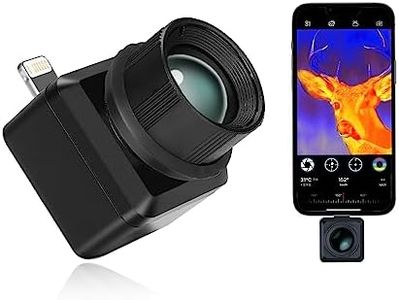
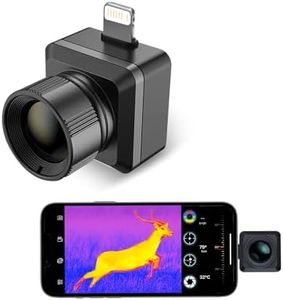
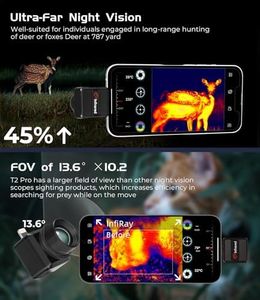
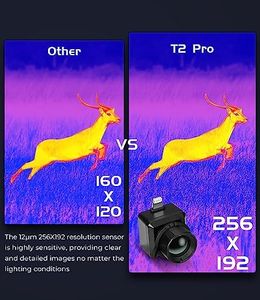
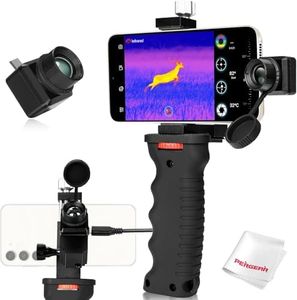
InfiRay T2 Pro Night Vision Thermal Monocular, Thermal Imager Camera, 256X192 Resolution, 13mm Focal Length, 13.6X10.2 FOV, Hot Spot Tracking for Hunting, Up to 1300m (for Android Only)
Rating
8.2
Resolution
Sensitivity (NETD)
Display and Connectivity

Most important from
138 reviews

Resolution
The device delivers impressive sensitivity and resolution for its size and price, revealing detailed thermal patterns even through walls and insulation.
Sensitivity (NETD)
The device delivers impressive sensitivity and resolution for its size and price, revealing detailed thermal patterns even through walls and insulation.
Display and Connectivity
The app supports clear image capture and video recording, enhancing the overall user experience during nighttime activities.
Durability and Ergonomics
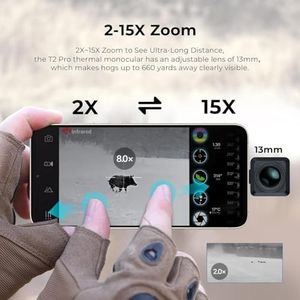
Fixed focus and 2x base zoom work well for distant targets but can be challenging for closer range use, suggesting a 1x lens option would improve versatility.

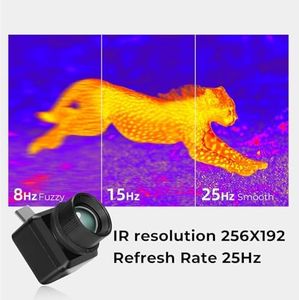
The InfiRay T2 Pro thermal monocular offers a solid entry point for users needing night vision, especially for activities like hunting or outdoor observation. Its 256x192 resolution and 13mm lens provide clear thermal images, with a 13.6° field of view that balances detail and area coverage well. The standout feature is its impressive detection range of up to 1300 meters, making it suitable for spotting heat sources from afar. Hot spot tracking helps quickly locate targets by focusing on heat signatures, which is useful in the dark or complex environments.

This device works exclusively with Android phones running version 6.0 or higher, which limits compatibility with other devices such as iPhones or older Android models. The fixed focus and 4:1 zoom ratio cover basic needs but may lack flexibility for some users. The lens features HD coating along with image algorithms designed to enhance clarity. Weighing around 800 grams, the unit is moderately portable though not ultra-light.

If you primarily want a thermal monocular to connect with an Android phone for nighttime viewing over long distances, the T2 Pro performs well. However, users requiring wider device compatibility or more comprehensive specifications may want to consider other options.

Rating
8.2
Resolution
Sensitivity (NETD)
Display and Connectivity

Most important from
138 reviews

Resolution
The device delivers impressive sensitivity and resolution for its size and price, revealing detailed thermal patterns even through walls and insulation.
Sensitivity (NETD)
The device delivers impressive sensitivity and resolution for its size and price, revealing detailed thermal patterns even through walls and insulation.
Display and Connectivity
The app supports clear image capture and video recording, enhancing the overall user experience during nighttime activities.
Durability and Ergonomics
Fixed focus and 2x base zoom work well for distant targets but can be challenging for closer range use, suggesting a 1x lens option would improve versatility.

Buying Guide for the Best Thermal Image Cameras

Thermal imaging cameras are powerful tools that allow you to see heat signatures and temperature differences in various environments. They are used in a wide range of applications, from building inspections and electrical maintenance to wildlife observation and security. To choose the right thermal imaging camera for your needs, it's important to understand the key specifications and how they impact the camera's performance and suitability for your specific use case.
ResolutionResolution refers to the number of pixels in the thermal image. Higher resolution provides more detail and clarity, which is important for identifying small temperature differences and capturing detailed images. Resolutions can range from low (80x60 pixels) to high (640x480 pixels or more). If you need to detect small objects or require detailed images for analysis, opt for a higher resolution. For general use or larger objects, a lower resolution may suffice.
Temperature RangeThe temperature range indicates the minimum and maximum temperatures the camera can measure. This is crucial for ensuring the camera can handle the temperatures you expect to encounter. For example, if you're inspecting industrial equipment that operates at high temperatures, you'll need a camera with a higher maximum temperature range. Conversely, for building inspections or wildlife observation, a lower range may be adequate.
Sensitivity (NETD)Sensitivity, often expressed as NETD (Noise Equivalent Temperature Difference), measures the camera's ability to detect small temperature differences. A lower NETD value indicates higher sensitivity and better performance in detecting subtle temperature variations. If your work requires identifying minute temperature changes, such as in medical diagnostics or detailed inspections, choose a camera with a lower NETD value. For less critical applications, a higher NETD may be acceptable.
Field of View (FOV)Field of View (FOV) describes the extent of the observable area the camera can capture. A wider FOV allows you to see a larger area at once, which is useful for scanning large spaces quickly. However, a narrower FOV provides more detail in a smaller area. Consider your typical use case: for broad area surveillance or inspections, a wider FOV is beneficial. For detailed analysis of specific areas, a narrower FOV is preferable.
Frame RateFrame rate indicates how many frames per second (fps) the camera can capture. Higher frame rates provide smoother video and are important for capturing fast-moving objects or dynamic scenes. Common frame rates range from 9 fps to 60 fps. If you need to monitor moving subjects or require real-time analysis, opt for a higher frame rate. For static inspections or slower processes, a lower frame rate may be sufficient.
Display and ConnectivityThe display quality and connectivity options of a thermal imaging camera affect how you view and share the thermal images. A high-resolution display makes it easier to see details on the camera itself, while connectivity options like Wi-Fi, Bluetooth, or USB allow you to transfer images to other devices for further analysis. Consider how you plan to use and share the images: if you need to quickly share data with a team or analyze images on a computer, ensure the camera has the necessary connectivity features.
Durability and ErgonomicsDurability and ergonomics refer to the camera's build quality and how comfortable it is to use. A rugged, durable camera is essential for harsh environments, while a lightweight, ergonomic design is important for extended use. Think about where and how often you'll be using the camera: for frequent fieldwork or industrial settings, prioritize durability. For long inspection sessions, ensure the camera is comfortable to hold and operate.

FAQ