We Use CookiesWe use cookies to enhance the security, performance, functionality and for analytical and promotional activities. By continuing to browse this site you are agreeing to our privacy policy

1 Best Autozone Jumper Cables 2026 in the United States
#1

Winner

10.0  score

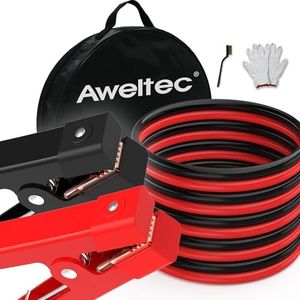
CARTMAN 10 Gauge 12 Feet Jumper Cables for Car Heavy Duty Booster Cables with Carry Bag
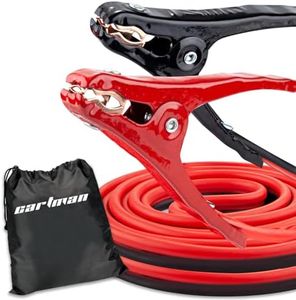
Cable Length: 12 Feet
Gauge: 10
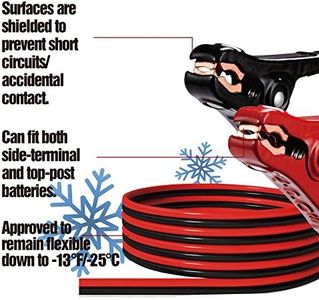
Clamp Quality: Patented design, non-conductive rubber
Insulation: TPR, withstands -25C (-13F)
Material: Copper-coated aluminum (CCA)

Chosen by 1261 this week

How do we rank products for you?

Our technology thoroughly searches through the online shopping world, reviewing hundreds of sites. We then process and analyze this information, updating in real-time to bring you the latest top-rated products. This way, you always get the best and most current options available.

headphones-stars

Our Top Picks

#1

Winner

CARTMAN 10 Gauge 12 Feet Jumper Cables for Car Heavy Duty Booster Cables with Carry Bag
Rating
10.0
Chosen by1,261
Gauge
Clamp Quality

Most important from
3256 reviews

Gauge
They are not the thickest cables but are perfect for jump-starting cars and light trucks, making them a reliable option for emergencies.
Clamp Quality
The design prevents stripping the clamps from the wires, showcasing thoughtful engineering and reliable performance.

The CARTMAN 10 Gauge 12 Feet Jumper Cables are a practical option for car owners, especially those with small-size cars. The 12-foot length is sufficient for most situations, allowing you to reach between vehicles with ease. The 10 gauge rating indicates that these cables are adequate for boosting smaller car batteries, although they might struggle with larger vehicles or trucks.

The patented design clamps, covered in non-conductive rubber, enhance safety and usability, fitting both top and side post batteries comfortably. The cables are made with copper-coated aluminum (CCA), providing good conductivity and power transfer, although pure copper would offer superior performance. Another notable feature is the TPR material insulation, which can withstand harsh temperatures down to -25C (-13F), making it reliable in extreme weather conditions.

The twice grip design ensures better conductivity and tension, enhancing their functionality. However, these cables might not be the best choice for larger vehicles or those looking for the highest quality materials. The carry bag is a convenient addition, making it easy to store the cables in your car. In summary, these jumper cables offer a good balance of affordability, practicality, and safety features for everyday use in small to mid-size vehicles.

Rating
10.0
Chosen by1,261
Gauge
Clamp Quality

Most important from
3256 reviews

Gauge
They are not the thickest cables but are perfect for jump-starting cars and light trucks, making them a reliable option for emergencies.
Clamp Quality
The design prevents stripping the clamps from the wires, showcasing thoughtful engineering and reliable performance.

Buying Guide for the Best Autozone Jumper Cables

Choosing the right jumper cables is crucial for ensuring you can effectively jump-start your vehicle when needed. Jumper cables come in various lengths, gauges, and materials, and understanding these specifications will help you make an informed decision. Here’s a guide to help you navigate through the key specifications and pick the best jumper cables for your needs.
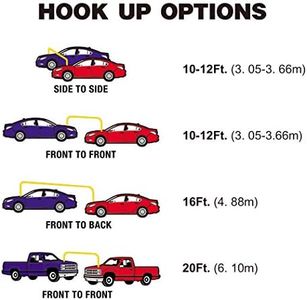
Cable LengthCable length refers to the distance between the two clamps on the jumper cables. This is important because it determines how easily you can connect the two vehicles. Jumper cables typically range from 10 to 25 feet. Shorter cables (10-12 feet) are more compact and easier to store, but they require the vehicles to be very close to each other. Medium-length cables (16-20 feet) offer a good balance between convenience and flexibility. Longer cables (20-25 feet) provide the most flexibility, allowing you to connect vehicles that are parked further apart. Choose the length based on how you anticipate using the cables and the typical parking situations you encounter.
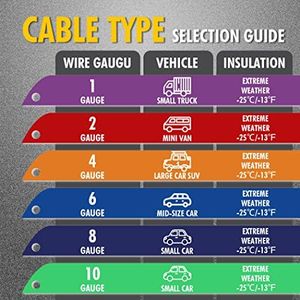
GaugeGauge refers to the thickness of the wire inside the jumper cables, and it is measured in numbers. The lower the gauge number, the thicker the wire and the more current it can carry. Common gauges for jumper cables are 2, 4, 6, and 8. Thicker cables (lower gauge numbers like 2 or 4) are better for larger vehicles with bigger engines, as they can handle higher currents and provide a stronger jump-start. Thinner cables (higher gauge numbers like 6 or 8) are suitable for smaller vehicles with smaller engines. Consider the size of your vehicle and its battery when choosing the gauge.
Clamp QualityClamp quality refers to the construction and material of the clamps at the ends of the jumper cables. Good quality clamps are essential for ensuring a secure and reliable connection to the battery terminals. Look for clamps that are made of solid metal and have strong springs to ensure they stay firmly attached. Clamps with a good amount of insulation can help prevent accidental short circuits. High-quality clamps are usually more durable and provide better conductivity, which is important for a successful jump-start. Choose clamps that feel sturdy and have a good grip.
InsulationInsulation refers to the protective coating around the wires of the jumper cables. Good insulation is important for safety and durability, as it prevents the wires from being exposed and reduces the risk of short circuits. Look for cables with thick, flexible insulation that can withstand various weather conditions and rough handling. High-quality insulation will also help the cables last longer and perform better. Choose cables with insulation that feels robust and flexible, ensuring they can be used in different environments without damage.
MaterialThe material of the jumper cables affects their conductivity and durability. Copper is the best conductor of electricity, so cables made with copper or copper-clad aluminum are preferred. Copper cables provide the best performance but can be more expensive. Copper-clad aluminum cables are a more affordable option and still offer good conductivity. Pure aluminum cables are less common and generally not recommended due to their lower conductivity. Choose cables made with high-quality materials to ensure reliable performance and longevity.

FAQ